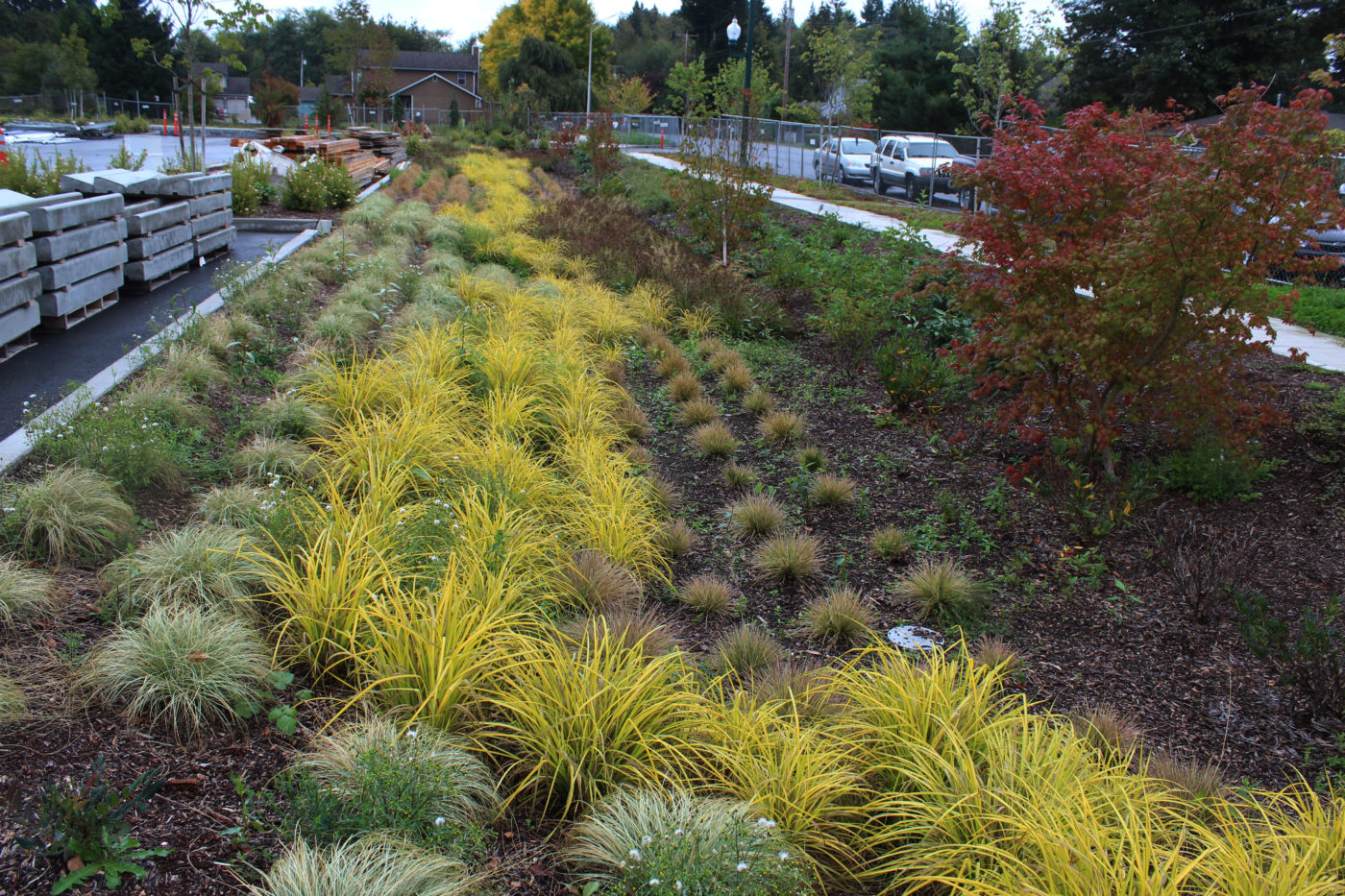
Low Impact Development Program
Welcome to the WSU Puyallup Low Impact Development Research Program
An extensive body of research conducted in the Pacific Northwest and the U.S. indicates that land development is one the largest threats to our nations aquatic resources, and that conventional stormwater management practices alone are inadequate to fully protect streams, wetlands, and other aquatic resources in the region (Booth, Hartley and Jackson, 2002).
Best available science suggests that a broad category of new stormwater management practices that come under the heading of low impact development (LID) or green stormwater infrastructure (GSI) can improve flow control, water quality treatment and protection of receiving waters. Accordingly, the states across the U.S. are considering adoption of LID practices. And the State of Washington will require the use of LID principles and practices as the first option for managing stormwater in western Washington by 2012.
While the decentralized LID approach shows promise to better manage stormwater, significant gaps remain in our understanding of the water quality treatment and flow control capabilities of bioretention, permeable paving, green roofs, and other LID practices. Additionally, data is needed to evaluate the performance of LID practices in prolonged wet conditions and soils with low infiltration rates typical in western Washington.
The mission of the WSU Puyallup LID Research Program is to reduce the impacts of stormwater on streams, lakes, wetlands, and coastal areas through effective, research-based application of LID management principles and practices.
The mission of the program is accomplished through several objectives including:
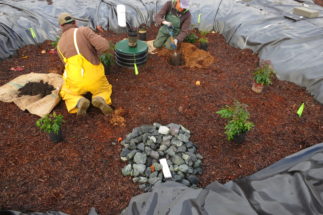
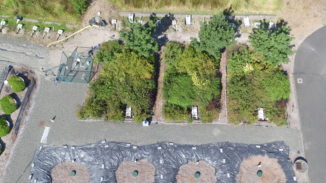
- Develop a living laboratory with full-scale, replicated LID management practices that serves a center for LID demonstration and education.
- Conduct detailed and long-term research examining:
- Flow control and water quality treatment characteristics of permeable pavement and bioretention systems.
- Physical and biological characteristics of bioretention soil.
- Physical and biological influence of plants on bioretention flow and water quality treatment performance.
- Use research data to evaluate and optimize the flow control and water quality treatment characteristics of individual LID management practices.
- Use research data to develop or refine models to predict LID performance at the site and landscape scales. Evaluate the ability of LID practices to directly reduce or eliminate the impacts of stormwater pollutants on aquatic organisms.
- Disseminate research data and design experience to stormwater designers and managers through various venues including the web, technical journals and manuals, annual reviews, workshops, and onsite tours.
WSUP LID Research Program is one of the largest installations in the nation focusing on the rapidly expanding field of low impact development or green stormwater infrastructure and offers the unique capability to conduct long-term research on full-scale, replicated bioretention and permeable pavement facilities.
LID Project Database
Sharing lessons-learned and project successes is as important as sharing research data to that your project is based on. As part of our information-sharing efforts, we are compiling a database of Low Impact Development Projects in the Northwest.View the interactive map of our project database now!
Realtime Data
Coming Soon We are about to launch real time access to our LID station and weather data. You will be able to view data collected from the WSU Puyallup Low Impact Development Research Facility. Check back soon!Questions about the LID Program?
Contact us with any question you may have about our LID Program. In the area? Drop us a line to schedule a tour of the LID Facilities including soil mesocosms, permeable-paved parking areas, and rain garden test cells.news
Events
Blog
4.20.12
Weekly Business Blog - April 20, 20124.13.12
Business Resource Weekly Blog9.1.11
Rain Garden volunteer opportunity!